We provide geotechnical analysis of foundations based on numerically simulating a full-scale load test of the foundation design using FBCM. The following plots show the results for a rectangular footing on sloping ground. The plots show the effects of setback on the bearing pressure versus settlement relationship.
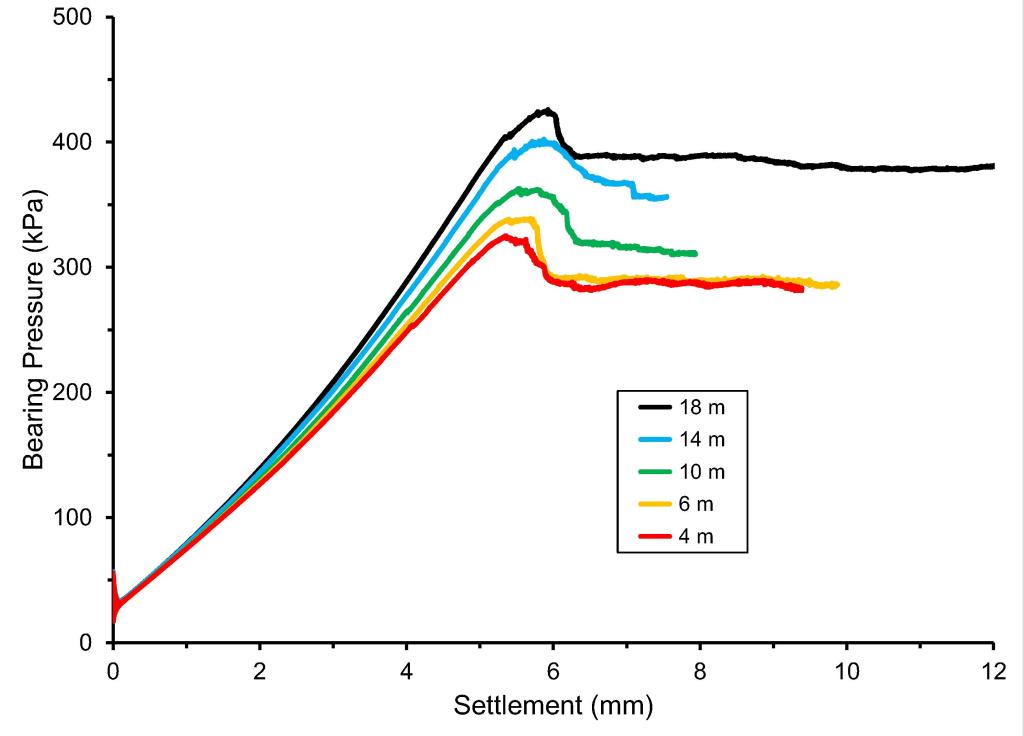
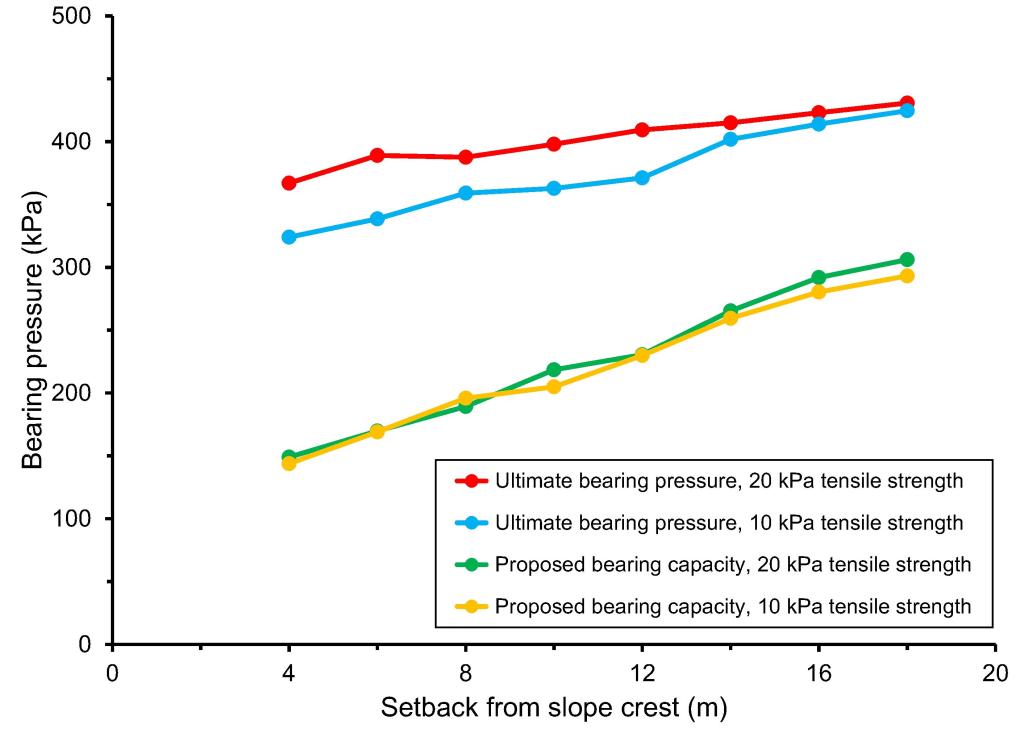
The foundation bearing capacity based on the simulated full-scale load test can be evaluated using the conventional approach by applying a safety factor to the ultimate bearing pressure. Alternatively, we propose a damage-based bearing capacity determined as the greatest bearing pressure too small to cause mechanical damage of the subsurface materials. For foundations on sloping ground, the following plots indicate the bearing capacity using either approach varies significantly with the foundation setback.
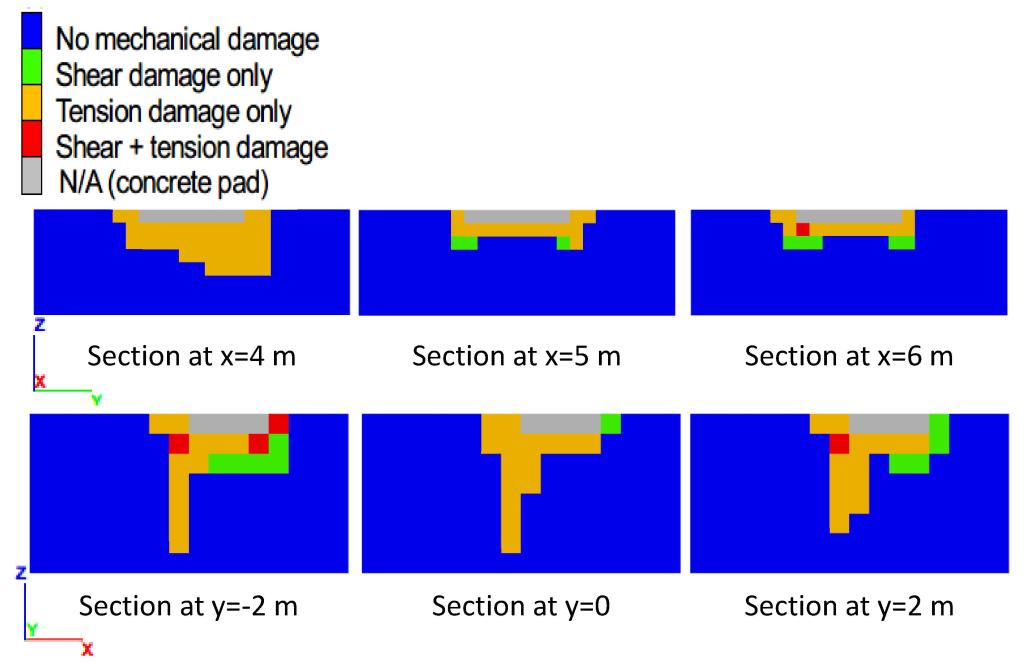
A key aspect of behavior for foundations on sloping ground is that potential mechanical damage of the subsurface materials is tension-dominated for foundations at small setback, such as the following examples. Conventional foundation analysis based on using bearing-capacity factors would not be appropriate for such foundations.
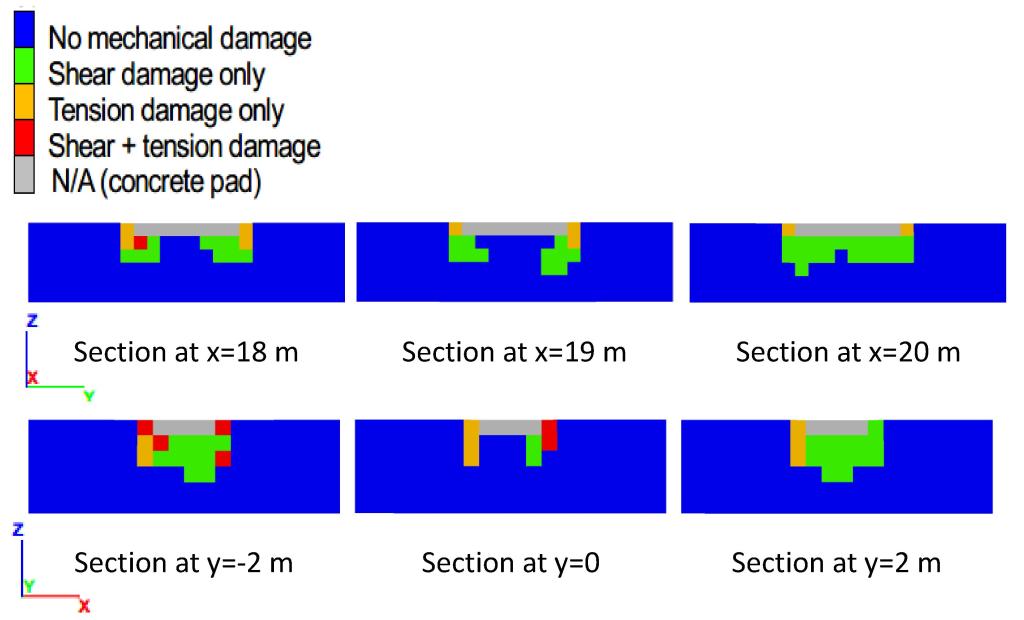
A key aspect of behavior for foundations on sloping ground is that potential mechanical damage of the subsurface materials is shear-dominated for foundations at large setback, such as the following examples. Conventional foundation analysis based on using bearing-capacity factors could be appropriate for such foundations.
 Geological processes modeling (GPM) research Institute